Ten years since the first direct detection of gravitational waves, the field is in bloom. Signals are being detected with higher clarity than ever — the pinnacle of this so far is the coalescence of black holes dubbed GW250114, which enabled stringent tests of fundamental physics. Our theoretical understanding and computational methods are advancing in step, allowing us to efficiently account for more and more effects. The next generation of detectors will allow for extraordinary physical insights, but some aspects of the current data analysis paradigm will need to change. Ground-based detectors will detect so many signals it will be impractical to expend the resources we currently do for each. Deci-Hertz detectors like the Lunar Gravitational Wave Antenna will observe the same stellar-mass binaries for a long time: this makes the choice of reference frame for the analysis non-trivial, while providing significant scientific value by constraining source parameters and providing early warning.
Preface
The hope is for this to be a “living document” of sorts, which I can keep updating after graduation.
This thesis is simultaneously compiled with quarto into both HTML — as a static website — and PDF. The HTML version is interactive, with hyperlinks, the possibility to see internal and external references by mouse over, and a dynamic table of contents. Also, several figures are rendered just-in-time from python code, which can be seen directly within the website. This literate programming-like approach (Knuth 1984) allows for reproducibility and transparency. I did not, however, adopt it for all figures, as several of them are rather complex and/or computationally intensive to generate.
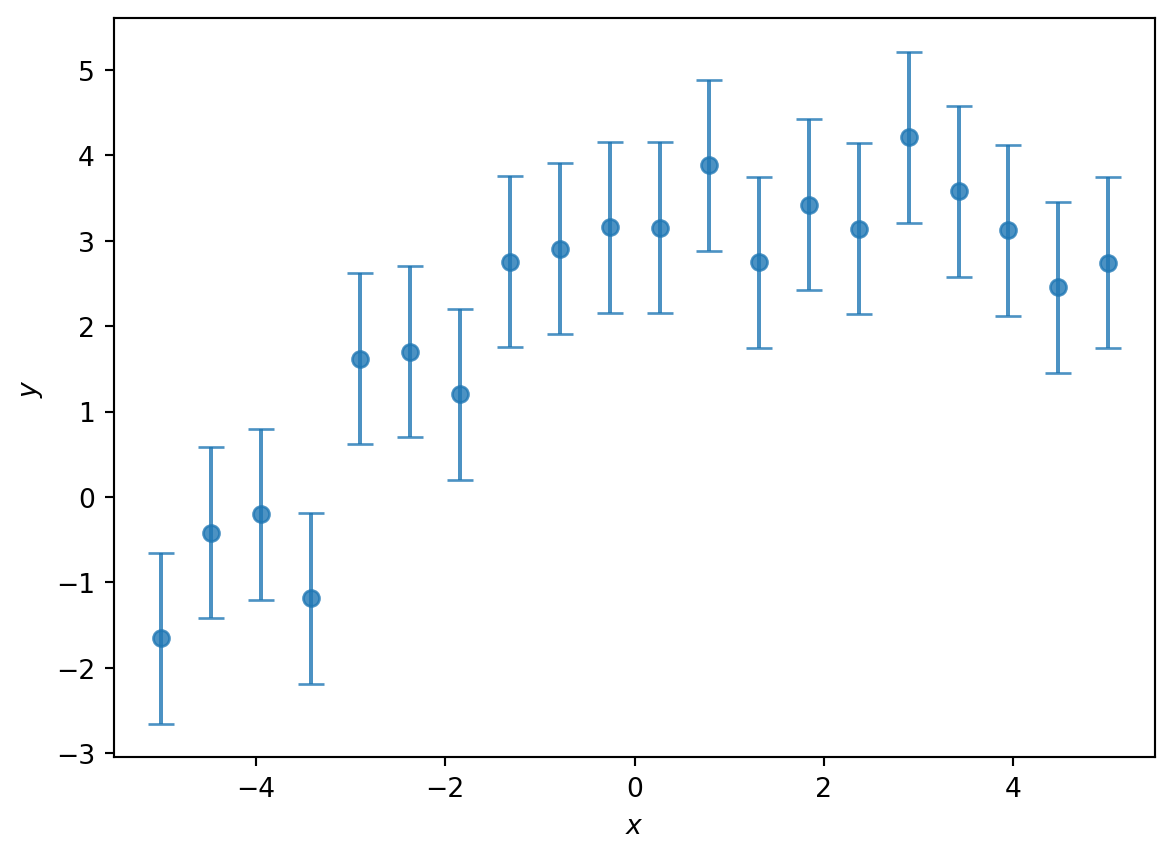
Here is an example of a plot rendered during deployment: